Exploring the impact of extraordinary challenge

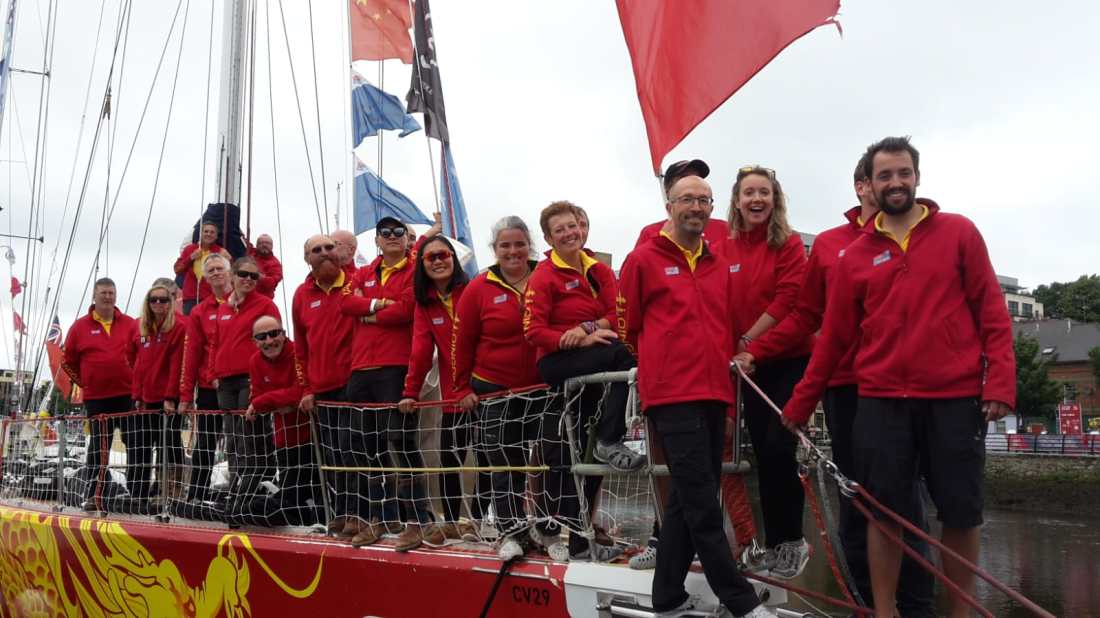
Qingdao are ready for off as the Clipper fleet start their final race around Ireland to Liverpool today.  In the long Irish stop over some of the round the world crew have had time to pause, reflect and consider what their futures might hold.  Sometimes these uncertainties are tough to navigate.  It may take courage and time to understand the impact of their extraordinary adventure and how this influences what next.

Exploring the Impact of Extraordinary Challenge is a study that started a year ago.  It is an intentional process designed to understand what changes, in ourselves and others, and what acts as a catalyst for development.  By growing awareness and expanding perspectives we become increasingly able to shape our intentions, decide on and meet our goals, and choose how we want to live our lives.

A few words by way of background:  The Clipper race is billed as the ‘race of your life’.  There is much anecdotal evidence of self-discovery, but what happens and the extent to which perspectives change has not been assessed in a structured way.

At the start of the race all study participants completed a questionnaire and an assessment of their stage of development. For many years we have known that children have distinct developmental stages.  More recently new frameworks have enabled us to understand what it is to develop as a adult. The study is using the STAGES assessment framework to identify participants pre-race core stage of development.  This is the level of our perspective taking, how we make meaning of our life’s experiences, what influences our strategies and actions, and our likely strengths and challenges.

As we grow up our perspectives expand – it is not so much like climbing stairs – more like blowing up a balloon – and as our perspectives expand we can experience disorientation.  Equally discomfort and challenge can act as catalysts forcing us to dig deeper to make sense of what is happening.

So as we have been racing we have kept diaries to track our thinking and emotions, action and team experiences.  After the race there will be second STAGES assessment.  This before and after will be a quantitative assessment of where participants were, and now are from a development perspective – and so identifying what has changed and what might be next.

By exploring the impact of extraordinary challenge in this way my commitment is to increase awareness of what is to develop, what is possible, what are catalysts and what can trip us up.  I hope this will support those that are curious as they face different or similar disorienting challenges, and that new understanding and expanded perspectives enable us all to face any challenges, individually or in teams or groups, with an increased capacity to navigate in ever present uncertainty.

Feedback, questions or comments are welcome – and if you haven’t already supported my fundraising initiative please go to: 

 https://gogetfunding.com/susan-robins-clipper/

Your support is much appreciated.


Lost and found… and what next


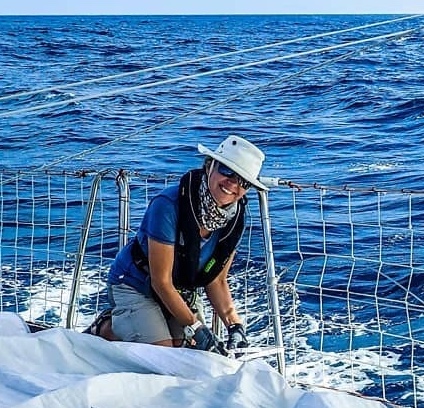
One Tilly hat… after a long, very hot boat open day in a New York marina I left my favourite sailing hat on Qingdao. Happily found by a friend and now making the final Leg of the race back across the Atlantic without me – whilst I await their return to Liverpool at the end of July.

Before leaving New York, whilst meandering round Central Park ‘lost and found’ took on a whole different meaning. Having experimented with ferries, buses and a yellow cab we still arrived too late for the intended highlights of Central Park tour. So we set off on our own. After the uniformity of streets and avenues with numbers and straight lines the park is a soft, gentle, verdant and chaotic jumble of twists and turns. Eventually we found a small booth with a map. No longer confused and lost we assumed a more confident approach to finding the suggested highlights on our own.

Even with a map and the occasional reference to a phone, attempts to figure out the direction from the sun – mostly just overhead and rather hot – glances to recognisable tall buildings on the periphery, we missed our way, again and again. We weren’t alone. Others were looking at maps, consulting phone gps and it was actually very funny.

Of course we found the odd lake, delightful quiet spots and when you simple wander and accept that being lost is normal in Central Park and in fact perhaps the whole point – it is quite beautiful… meandering, enjoying whatever appears around the corner, the gorgeous variety of parkland and being temporarily lost, when so much of our time and our life requires us to show up as found – knowing where we are and what needs to be done.

When we are lost we open ourselves to the unexpected, we become more receptive, perhaps we engage different senses, become more aware of ourselves and our environment. If we can pause and accept our discomfort we may find we have different choices. In a moment we can be lost, then found… then lost again. Perhaps both are not just temporary, but also illusory and our challenge is to accept and navigate our way in perpetual change and uncertainty.

Developing our guiding, core principles… or in the case of the Park, finding the boundaries where Park once again meets city, may be challenging but it also becomes essential.

Now I am back home. It has been an amazing and incredible journey on so many different levels, nevertheless I am very happy to be back. One of my fellow round the world crew said one of the many things he had learnt along the way was just how much he appreciated his home and England. Naturally I am also very looking forward to being back on the water again closer to home, racing in the Solent in the next couple of weeks.

What next: When the Clipper race finishes in Liverpool I will be there to welcome my team home. Once the celebrations are over we will go our separate ways knowing we have made friends for life and for sure it won’t be long before we meet up again.

My work on the study will start in earnest as I pull together crew stories and diaries, interview study participants and complete assessments. This will not be rushed as the impact of our journeys will take time to digest and unfold. I know in myself how much has changed and I have seen it in others. My commitment is to reveal the impact of the quite extraordinary challenges we have faced and specifically explore the questions:

  • What has changed, how have our perspectives expanded, what have we learnt, how have we developed
  • How can this help us navigate uncertainty with more agility in the future and will this encourage or enable us to take on new challenges in the future
  • What have we discovered about ourselves, about other crew and team dynamics and to what extent is this as profound and enduring as our sailing has been phenomenal and exciting.

I continue to appreciate your support and hope you will challenge me by commenting with your feedback and questions.